
Imagine a world where nothing goes to waste—a place where discarded items don’t end up in overflowing landfills but instead loop back into use, value, and life. This is the vision of the circular economy, a model defined by scholars and practitioners alike as a restorative and regenerative system. It actively keeps materials in use through maintenance, repairing, refurbishing, remanufacturing, recycling, and even composting.
Unlike the extractive, take-make-waste model that underpins our current economy—where resources are taken from the earth, turned into products, and eventually thrown away—a circular economy designs systems where products and materials continually circulate.
Key Takeaways
- Redesigning Systems: The circular economy replaces the linear “take-make-waste” model with a regenerative approach that keeps materials in use.
- Three Core Principles: It is built on designing out waste, keeping products/materials at their highest value, and regenerating natural systems.
- Environmental Impact: Circular practices reduce emissions, waste, and resource extraction—improving air, water, and ecosystem health.
- Economic Benefits: Circular models create new business opportunities, reduce costs, and can significantly cut transformation expenses in key industries.
- Social Gains: Millions of new jobs can emerge in repair, recycling, and reuse sectors, while community-based initiatives strengthen local resilience.
- Implementation Needs: Success depends on circular design, innovative business models, reverse logistics, collaboration, and supportive policies.
- Challenges Remain: Infrastructure gaps, consumer behaviour, and fragmented regulations hinder widespread adoption.
- Future Outlook: With smart investment and equity-focused strategies, circular systems could cut global emissions by up to 40%—ushering in a more sustainable, inclusive future.
Three Core Principles
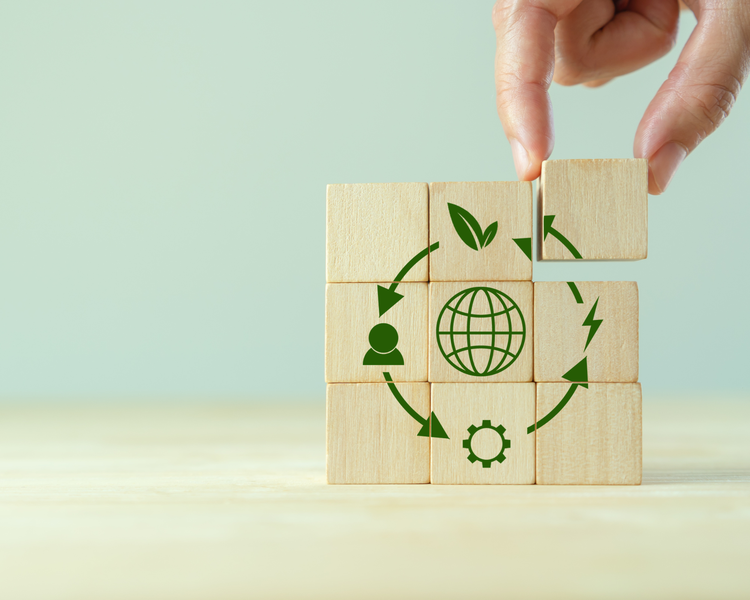
At its core, the circular economy is based on three foundational principles, often attributed to the Ellen MacArthur Foundation and supported by rigorous research.
Designing Out Waste and Pollution
From the outset, products are conceived with their whole life in mind. This means environmental impacts aren’t an afterthought—they’re an integral part of design. Researchers emphasise that early-stage decisions in design have an outsized influence on a product’s environmental footprint. Whether a sweater, a smartphone, or a building, designers strive to eliminate waste at every stage—choosing recyclable materials, avoiding toxic chemicals, and making items easy to disassemble.
Circulating Products and Materials at Their Highest Value
This principle goes beyond just recycling: it’s about extending product life through reuse, repair, refurbishment, remanufacturing, and upgrading. Rather than a smartphone being discarded after a year, it might be refurbished and resold; a worn-out piece of furniture might be repaired; industrial components might be remanufactured. Studies show that these life-extension strategies can significantly reduce material consumption and emissions.
Regenerating Natural Systems
Nature isn’t just a passive provider but an active participant in the circular economy. This principle aims to avoid harming ecosystems while replenishing them—through regenerative agriculture, composting, and the integration of renewable energy systems. Scholars debate the nuanced meanings of “restorative” versus “regenerative,” finding that while restoration has clearer ecological roots, regeneration is often more metaphorical. Still, both concepts point to aligning human systems with natural cycles.
Contrast with the Linear “Take-Make-Waste” Model
Our current economy is structured like an arrow: we take raw materials from the earth, make products, and then dispose of them. This linear model creates staggering amounts of waste and pollution. In stark contrast, the circular model is more like a circle or a butterfly, where materials flow continuously, value is retained, and ecosystems are preserved. Scientific reviews highlight that the circular approach doesn’t merely delay waste—it seeks to prevent it, cutting emissions and resource use while fostering sustainable economic growth.
Benefits & Impact
When we shift to a circular economy, the benefits ripple across environmental, economic, and social spheres, supported by robust scientific evidence.
Environmental Gains
The circular economy slashes waste and greenhouse gas emissions by closing material loops. Shifting industrial systems towards circularity—through reuse, recycling, and by-product valorisation—can significantly curb carbon output while enhancing air and water quality. In sectors like construction and transport, circular strategies related to product design and consumption behaviour hold the greatest potential for lowering emissions.
By recycling materials instead of extracting virgin resources, circular systems reduce pressure on forests, minerals, and ecosystems.
Economic Opportunities
Recent economic assessments paint an optimistic picture: embracing circular models—especially in areas like remanufacturing, refurbishing, and reuse—unlocks new markets and revenue streams. Industrial-scale recycling in Germany’s energy transition could cut its transformation costs by 26% by 2050.
Social Uplift
On the societal front, a circular economy stimulates employment and community resilience. One projection by the International Labour Organisation suggests that millions of new jobs will be created worldwide by 2030, particularly in the repair, recycling, and product service sectors. In the UK, a robust circular economy policy could create up to 500,000 new jobs by 2030. Beyond job creation, localised material loops—such as neighbourhood repair cafes and recycling initiatives—strengthen community ties, foster shared responsibility, and nurture circular mindsets.
Implementation Pathways
Real-world progress requires translating circular principles into practical systems, ensuring that good intentions become meaningful actions.
Circular Design & Innovation
The journey begins at the drawing board. More than 80% of a product’s environmental impact is determined during its design phase. Designing for durability, modularity, and recyclability empowers materials and products to re-enter the supply chain, extending their life and minimising waste.
New Business Models
Companies are rethinking ownership altogether. Models like product-as-a-service or leasing—used in sectors from fashion to appliances—shift the focus from individual consumption to systemic use. These models incentivise manufacturers to build longer-lasting goods and maintain them over time, as seen in pilot programs across retail and mobility. They turn linear consumption into circular usage, generating recurring value.
Reverse Logistics & Infrastructure
To keep materials flowing back into productive use, we need robust reverse logistics—systems that take back, disassemble, and remanufacture products. Multiple scientific studies, from Brazil to retail markets, emphasise that well-designed reverse logistics reduce landfill waste, boost recycling rates, and even lower costs through the use of robotics, IoT, and tracking systems.
Cross-Sector Collaboration
Circular systems thrive on partnerships. Universities, firms, and governments collaborating across sectors are paving the way for industrial symbiosis, where by-products from one process power another. From integrated recycling to shared material databases, collaboration breaks silos and sustains momentum toward systems-level change.
Policy & Regulation
Finally, smart legislation drives adoption. Policies like France’s anti-waste laws, mandatory take-back mandates, and producer responsibility regulations incentivise circularity. On a global scale, frameworks and public procurement strategies can be tuned to reward circular goods and overcome regulatory fragmentation. When aligned effectively, policy transforms isolated efforts into systemic shifts.
Challenges & Limitations
Despite successes, significant hurdles remain. Infrastructure and investment gaps persist, particularly where large-scale logistics systems are lacking. Without reverse logistics networks, take-back programs, or recycling plants, circular ambitions stall before they even begin.
Consumer behaviour adds another layer of complexity. As one user on r/CircularEconomy remarked, “materials that are cycled back into the global economy… account for just 7.2%”—a stark reminder that without shifting how we consume, circular initiatives can only go so far.
Policy fragmentation across jurisdictions—like varied container deposit programs and inconsistent regulations—raises costs and complicates implementation. Experts warn that without coherent, cross-state frameworks, ambitious targets are at risk of falling short.
Future Outlook & Opportunities
Even with these challenges, the promise of a circular world is vast. Global models suggest that scaling circular practices worldwide could reduce emissions by approximately 40 per cent—a figure that captures the urgency and possibility of broad adoption.
Looking ahead, thinkers emphasise that the transition must embrace social equity, incorporating economic, environmental, and social pillars into a “circular economy spiral.” This model ensures that the benefits of resource efficiency and emissions cuts are shared across communities—and not concentrated among elites.
On the technological front, innovation offers powerful enablers: digital material passports promise transparency in resource composition, while AI-driven remanufacturing can optimise processes and extend product lifespans.
Conclusion
The circular economy is more than just a waste-reduction strategy—it’s a fundamental reimagining of how we interact with resources, products, and the planet. By designing systems that are regenerative by design and restorative in practice, the circular model provides a pathway to decouple economic growth from environmental degradation.
While challenges such as infrastructure gaps and policy fragmentation persist, momentum is growing. From grassroots repair initiatives to national legislation and industrial innovation, real-world examples show that circularity is not only possible but increasingly practical.
Embracing this model demands collaboration across sectors, bold policy, and a cultural shift in how we define value and progress. The rewards—a cleaner environment, stronger communities, and resilient economies—are well worth the effort. As we close the loop on waste, we open the door to a more sustainable, equitable future.