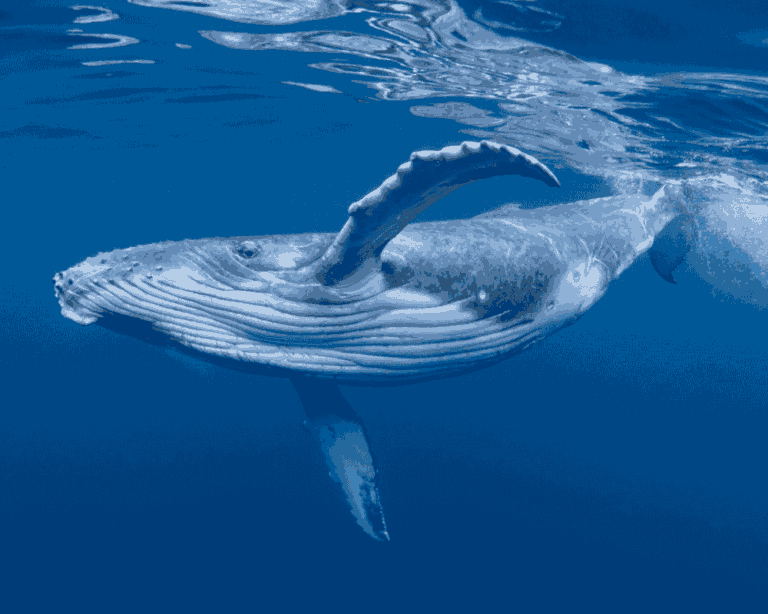

As marine traffic continues to expand, overlapping busy shipping routes with whales’ migratory paths often results in fatal encounters.
The increasing incidence of whales being struck by ships raises questions about the adequacy of current maritime navigation practices and the effectiveness of existing technologies in detecting these mammals.
Key Takeaways
- Overlap of Shipping Routes and Whale Habitats: Increased marine traffic intersecting with whale migratory paths leads to more frequent and often fatal collisions.
- Behavioural Vulnerability: Whales’ surface behaviour for breathing and foraging heightens their risk of being struck by ships.
- Impact of Ship Speeds: Vessel speeds above 11.8 knots significantly increase the likelihood of fatal whale collisions.
- Acoustic Interference: Noise from ships’ bows disrupts whales’ navigation and communication, making it harder for them to avoid approaching vessels.
- Population Threat: Ship strikes contribute to declining whale populations.
- Mitigation Strategies:
- Enforcing ship speed restrictions in whale habitats.
- Establishing seasonal management areas and dynamic speed zones.
- Rerouting shipping lanes away from critical whale habitats.
- Implementing real-time monitoring systems for whale detection.
- Increasing public awareness and training ship crews on whale avoidance techniques.
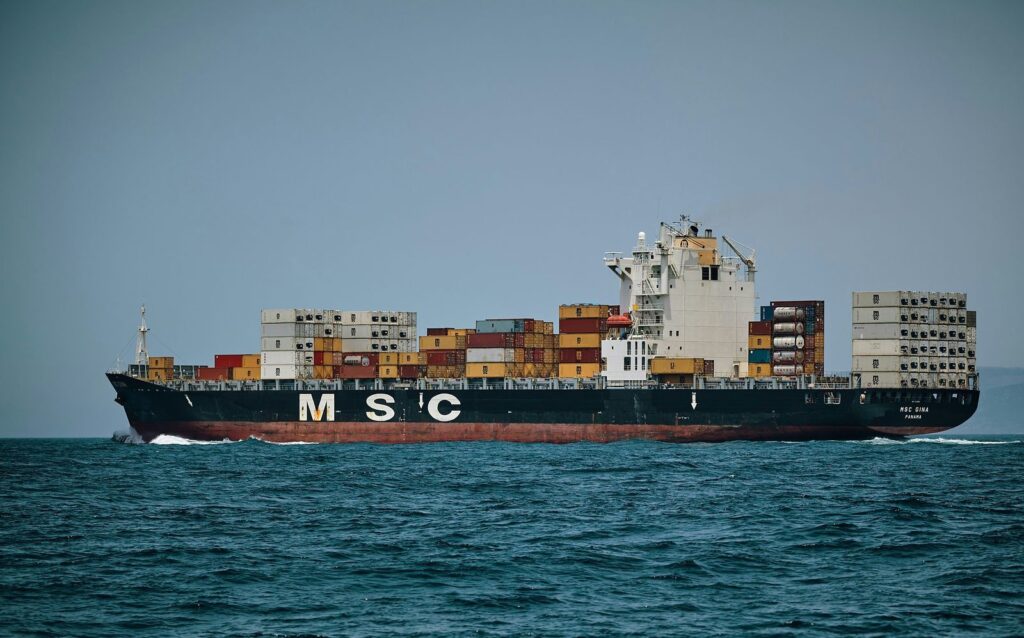
Why do Whales Collide with Ships?
Whales are struck by ships due to their behaviour of surfacing to breathe and foraging near the surface, which puts them in the path of vessels. This risk is heightened in areas where busy shipping lanes overlap with whale habitats, such as the Gulf of St. Lawrence for North Atlantic Right Whales. These whales, which have recently expanded their foraging range into this region, are particularly vulnerable because they spend significant time near the surface.
Increased ship speeds, which have risen significantly since the mid-20th century, correlate with higher probabilities of both non-lethal and lethal ship strikes. Studies show that vessel speeds above 11.8 knots dramatically increase the likelihood of a fatal collision.
Modelling studies integrating ship and whale density data with vessel speed offer insights into the risks and help devise mitigation strategies to reduce these fatal encounters.
Additionally, the noise generated by ships’ bows can drown out the acoustic signals that whales rely on for navigation and communication. Acoustic interference complicates their ability to detect approaching vessels, increasing the risk of collisions.
Several factors contribute to the frequent collisions between ships and whales, including the whales’ inability to perceive these large vessels as threats. Having few natural enemies, and in some cases, like the Killer Whale being an apex predator, whales often do not recognize ships as potential dangers.
Impact on Whale Populations
The mortality from ship strikes poses a threat to whale populations, which are often already at risk due to their low reproductive rates and declining numbers.
The frequency of ship strikes has increased with global shipping activity, and collisions are often fatal when vessels travel at speeds above 11.8 knots. The mortality from ship strikes can lead to significant population declines, as seen in the alarming number of North Atlantic right whale deaths in the Gulf of St. Lawrence. Given their already precarious status, each ship strike exacerbates the risk of extinction for these endangered species, highlighting the urgent need for effective measures to mitigate this threat and ensure their survival.
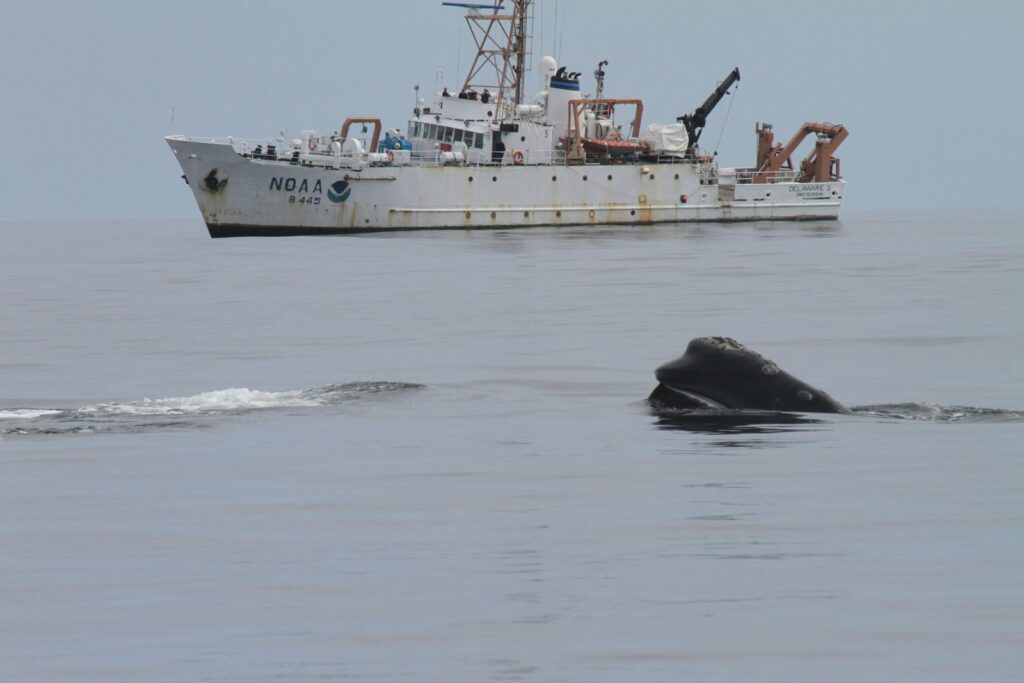
Prevention Strategies: How to Reduce Ship Strikes
- Implementing ship speed restrictions in areas frequented by whales has been suggested as a mitigation measure to reduce the risk of vessel strikes. Slower ship speeds give whales more time to detect and avoid approaching vessels, potentially decreasing the likelihood of fatal encounters. However, the effectiveness of such measures relies on stringent enforcement and compliance by all maritime operators traversing these sensitive areas.
- Establishing seasonal management areas and dynamic speed zones based on real-time whale sightings can help protect whales during their peak migration and foraging periods.
- Another strategy involves rerouting shipping lanes away from critical whale habitats, as evidenced by successful initiatives in regions like the Gulf of St. Lawrence.
- Technological solutions such as real-time monitoring systems using acoustic or satellite tracking to detect whale presence can alert ships to slow down or change course.
- Public awareness campaigns and training for ship crews on whale avoidance techniques also play a crucial role.
Conclusions
The increasing overlap of busy shipping routes with whale migratory paths has resulted in a rise in fatal encounters between ships and whales.
This trend raises significant concerns about the adequacy of current maritime navigation practices and the effectiveness of technologies designed to detect these marine mammals.
Several factors contribute to the high incidence of collisions, including whales’ surface behaviour for breathing and foraging, increased ship speeds, and acoustic interference from ships that hinder whales’ ability to detect approaching vessels.
The impact of ship strikes is profound, particularly on already endangered whale populations.
To mitigate this threat, various prevention strategies have been proposed.
Effective implementation and compliance with these measures are crucial to reducing the risk of ship strikes and ensuring the survival of vulnerable whale populations.