
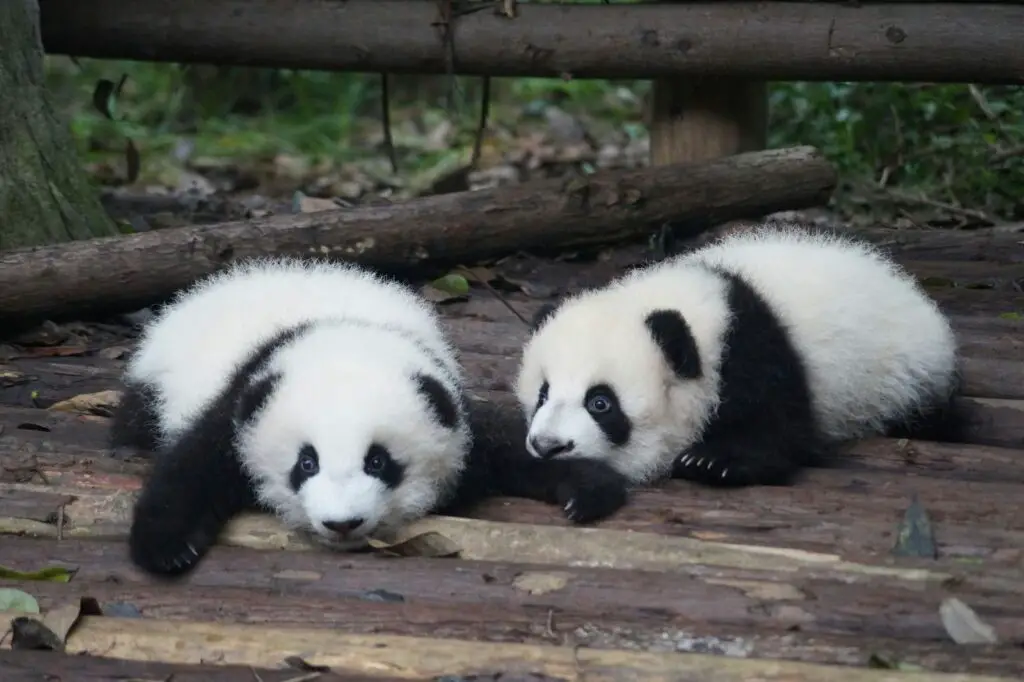
While adult giant pandas have few natural predators, their young cubs face significant threats. Snow leopards are Panda predators, targeting vulnerable cubs. Opportunistic predators like jackals and yellow-throated martens can also be dangerous when cubs are away from their mum.
Protection from the mother is very important for cubs, who weigh only 100 to 200 grams at birth and are defenceless. Their climbing skills improve as they grow, offering a means to escape threats.
Main Takeaway
- Adult giant pandas face few natural predators, but their cubs are highly vulnerable.
- Snow leopards, jackals, wild dogs, and yellow-throated martens prey on panda cubs.
- Mother pandas protect their cubs, especially in the early months.
- Panda cubs develop climbing skills to escape predators as they grow older.
- Adult pandas rely on their size, strength, and powerful jaws for defence.
- Human activities like habitat destruction, poaching, and climate change pose serious threats to pandas.
- Conservation efforts have significantly increased panda populations, with habitat protection being crucial for their future survival.
Natural Predators of Pandas
Despite being big and strong, giant pandas are not entirely free from the threat of natural predators. While adult pandas, due to their considerable physical strength, face few threats in their natural habitats, the younger Pandas are far more vulnerable.
Panda cubs, especially in their early stages, attract the attention of several natural predators. Among these, snow leopards are the biggest threat.
Snow leopards live in the mountainous regions of China, sharing their habitat with giant pandas.
Vulnerability of Panda Cubs
Panda cubs are born tiny, weighing only about 100 to 200 grams. Their small size makes them susceptible to natural predators such as snow leopards and jackals.
Mother pandas exhibit remarkable protective behaviour to mitigate risks. They keep their cubs protected in dense vegetation, hiding them from larger predators during the early months of life.
By the age of six months, panda cubs develop the ability to climb trees, a skill that serves as an escape tactic from potential threats.
List of predators of giant pandas cubs:
- Wild Dogs: These pack hunters are dangerous to panda cubs and can occasionally kill adult pandas.
- Snow Leopards: Snow leopards share their habitat with pandas, and they are powerful predators that typically target panda cubs.
- Jackals: Opportunistic hunters and scavengers, jackals sometimes prey on panda cubs. Their hunting instincts make them occasionally prey on younger, vulnerable pandas.
- Yellow-throated Martens: Martens are known to attack panda cubs, sometimes wounding or killing them.

Panda Defenses when Adults
Pandas have a distinctive black and white fur pattern that instantly makes them recognizable. This unique fur colour provides effective camouflage in bamboo forests.
Fully grown pandas can reach up to 1.5 meters in length and weigh as much as 150 kg; they have good strength and can defend themselves from most natural threats. Giant pandas possess a range of defensive mechanisms. Among the most notable panda defences are their powerful jaws and teeth.
Although generally peaceful creatures, pandas can behave aggressively when cornered or protecting their cubs.
Panda bears are also good swimmers. These diverse defensive strategies help massively panda bears to survive in the wild.
Size, Strength and Physical Characteristics of Adult Pandas
In the dense bamboo forests of China, the size and strength of fully-grown giant pandas prove their dominance in their natural habitat. They reach lengths of up to 1.5 meters (approximately 5 feet) and weigh between 100 and 150 kg (220 to 330 pounds).
Their large size and robust physical attributes contribute to their standing within the wildlife population as apex predators, where they face minimal threats from other wildlife.
Giant pandas possess large molar teeth specifically adapted for crushing bamboo, their primary diet. However, molars serve a dual purpose: chewing and defence tools. Additionally, pandas are equipped with strong jaw muscles.
Despite their important size and physical strength, which offer adult pandas a certain level of security, young panda cubs remain vulnerable.
Threats From Humans
Giant pandas face considerable threats from human activities that jeopardize their survival. Habitat loss due to agriculture, logging, and urban development has drastically reduced the natural environments where pandas live and find food. Habitat fragmentation limits their range and reduces bamboo availability, constituting approximately 99% of a panda’s diet. Consequently, pandas struggle to find sufficient nutrients, further endangering their populations.
Although targeted primarily at other wildlife, poaching remains a considerable problem for giant pandas. Accidental trapping during illegal hunting activities poses a risk.
Additionally, the black market trade for panda furs and other body parts is still a potential threat despite increased penalties and stricter legal protections in China.
Climate change further complicates the risk of losing bamboo forests by altering bamboo growth patterns, making it even more difficult for pandas to find adequate food sources.
Conservation Efforts
Over the years, Giant Panda has become the image of wildlife conservation.
Through dedicated initiatives and collaborative efforts, conservation strategies for giant pandas have become essential in ensuring the species’ survival.
Conservation efforts primarily focus on habitat preservation and restoration, which is critical for maintaining the ecosystem that giant pandas depend on. The International Union for Conservation of Nature (IUCN) classifies pandas as vulnerable, highlighting how important sustained conservation activities are to protect and grow panda populations.
Concerted conservation efforts have made significant progress since the 1980s. These initiatives have resulted in a notable increase in panda numbers, with the wild population rising to approximately 1,864 individuals by March 2015.
Legal frameworks such as China’s Wildlife Protection Act of 1988 have played a key role in curbing poaching and mitigating habitat destruction, contributing to the species’ resurgence.
Continuous habitat preservation efforts and establishing protected areas are essential in ensuring that the gains in panda numbers are maintained and further improved, securing a future for this iconic species.
Conclusions
While adult giant pandas face few natural threats due to their size and strength, their cubs remain vulnerable to predators such as snow leopards, jackals, and yellow-throated martens. Mother pandas’ protective behaviour, combined with the cubs’ developing climbing skills, allows cubs to defend themselves against these threats.
Adult pandas’ physical attributes, including their strong jaws and size, allow them to defend themselves effectively. However, human activities pose significant threats to pandas, such as habitat loss, poaching, and the effects of anthropic climate change, all of which endanger their habitat and, consequently, their survival.
Conservation efforts have improved the giant panda population, as habitat preservation and legal protections have helped mitigate pandas’ threats. Sustaining these efforts will be key to ensuring the survival of this iconic species.
The delicate balance of threats that pandas face from natural predators and human-induced dangers is important. Protecting young pandas is crucial, but long-term conservation strategies are equally important for safeguarding their habitat and future.