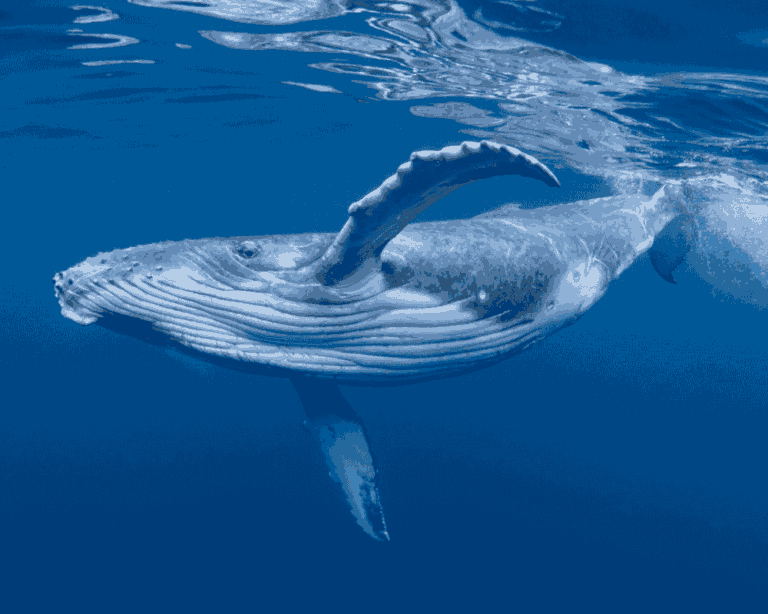

An interesting fact about whales, particularly baleen species, is that they have hair!
Hairs on baleen bodies have a sparse and sometimes almost invisible distribution. These hairs are residual traits from their ancestors and are believed to serve sensory functions.
Hairs are strategically positioned around whales’ bodies, aiding navigation and prey detection in oceanic waters. This adaptation to environmental challenges is important, but many aspects of hair’s utility and evolutionary significance remain unclear, and further studies are needed to understand their functions.
Key Takeaways:
- Many whale species, particularly baleen whales, possess hair follicles, typically located on their heads and other body parts.
- Whale hair serves a sensory role, aiding navigation, prey and forage detection, and social interactions.
- Baleen whale species have varying numbers of hair follicles, often in the range of 30 to 100.
- Species like humpback, fin, sei, right, and bowhead whales and river dolphins have hair follicles.
- Whale calves are born with hair, which changes in number and function as they mature.
- Like the Amazon river dolphin, some species retain stiff hairs throughout life.
Whale Hair – An overview
While the image of these marine giants often omits any mention of hair, many whale species possess hair follicles, albeit in modest numbers.
Typically located on their heads, whales have 30 to 100 hairs on their bodies, depending on the species. The intriguing aspect is that whale hair follicles are densely surrounded by nerves, suggesting a sensory function.
Researchers believe these hair follicles are important in how whales interact with their environment.
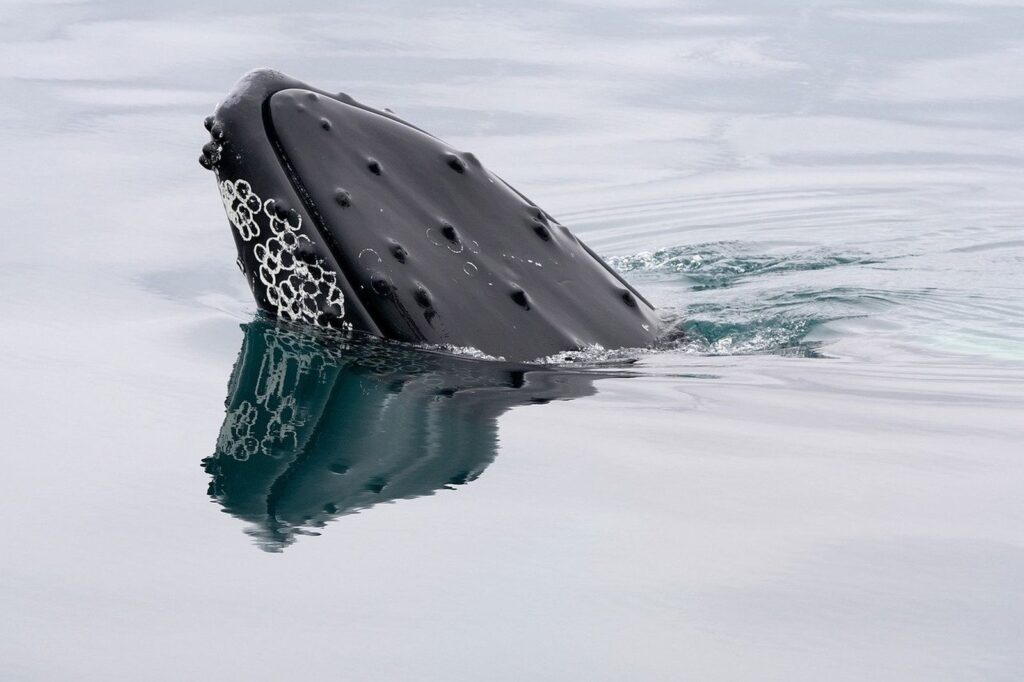
For instance, humpback whales are noted for their distinct hair follicles, which appear prominently on the unique, golf ball-sized bumps across their heads.
In species like the humpback whale, hairs are found within specialized structures known as tubercles, which are thought to enhance the whale’s ability to sense its surroundings.
This sensory capability could be important in manoeuvring through complex ocean currents, detecting nearby prey, or facilitating social interactions among pods. The precise mechanisms through which hair contributes to these sensory functions remain a topic of scientific study.
Types of Whales With Hair
Several species of baleen whales, including humpback, fin, sei, right, and bowhead, possess hair follicles on various parts of their bodies, such as the upper and lower jaw, chin, head, and around the blowhole.
These hair follicles are an evolutionary remnant, indicating that ancient whales once had more extensive hair coverage. In modern baleen whales, these follicles typically host a few sparse but visible hairs.
Each species of baleen whales may have varying numbers of hair follicles, ranging from 30 to 100.
Unlike baleen whales, River dolphins, another group within the cetacean family, also have hair follicles, which seem important for their sensory navigation in murky river waters.
Sensory Functions of Whale Hair
The sensory functions of whale hair are important for their foraging behaviour.
These vibrissae, or sensory hairs, are hypothesized to detect hydrodynamic signals in the water, enabling the whales to identify and discriminate prey density and structure within zooplankton patches.
The hairs’ small size relative to the whales’ large body allows for fine-scale detection, providing feedback that aids in adjusting the feeding apparatus, such as gape and rostral positioning.
This sensory input is particularly beneficial for the whales’ skim-feeding method. It allows them to efficiently navigate and exploit prey-rich areas by sensing the subtle water movements and disturbances caused by their zooplankton prey.
The unique distribution pattern of these hairs on the whales’ heads suggests an adaptation for effective feeding both at the surface and depth, enhancing their ability to stay within optimal prey patches and make necessary adjustments based on prey density gradients.
Are Whales Born with Hair?
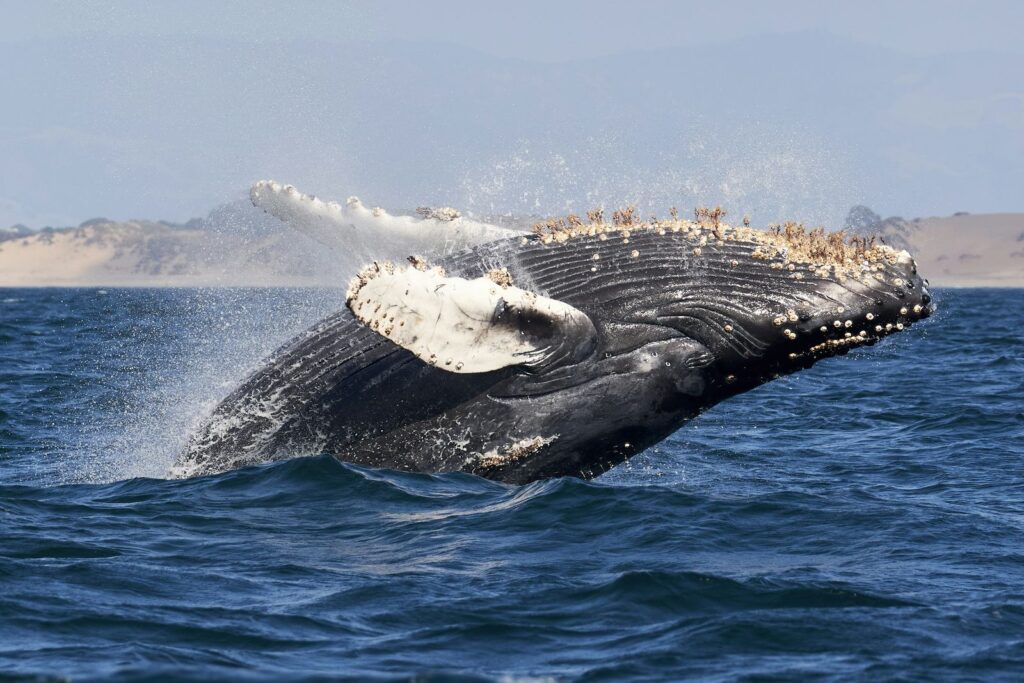
Several hair follicles can be observed on the heads of newborn whales, especially in species like humpback whales. They are used in the early stages of life, possibly providing sensory feedback to the newborns.
As whales mature, the visibility and function of hair change dramatically. Toothed whales, for instance, exhibit hair along their snout before birth. However, this hair is lost shortly after they enter the world, suggesting a shift in sensory strategies as they age.
Conversely, the Amazon river dolphin maintains stiff hairs on its snout throughout its life. This adaptation is particularly beneficial as it helps it search for food in the river’s muddy waters.
Conclusions
Whale hair is a functional trait that has evolved to meet modern whale species’ sensory needs.
Hair follicles enhance navigation, prey detection, and social interactions in aquatic environments. The number and distribution of these follicles vary among species, indicating diverse evolutionary paths and environmental adaptations.
Hair follicles are particularly prominent in newborn whales, serving important sensory functions that evolve as the whale matures.
While progress has been made in understanding whale hair, further research is needed to fully elucidate its precise functions and evolutionary significance.