
In a quiet corner of northern France, not far from the village of Le Bec-Hellouin, lies a farm that resembles less a traditional farm and more a thriving garden of life. On the surface, it seems ordinary—rows of vegetables, fruit trees, winding paths, and even a patch of woodland. But hidden below the soil, something extraordinary is happening.
When scientists came to study this land, they made important observations for the world of environmental science: the soils of this permaculture farm were storing five to six times more carbon than the soils of nearby conventional fields. That’s not just a minor improvement—it’s a massive leap in our fight against climate change.
At The Planet Journey, we love following these quiet revolutions. Because sometimes, the most powerful solutions don’t roar with technology or shine with steel—they whisper softly in the roots, fungi, and soil beneath our feet. This is one of those stories.
What Is Permaculture?
The word permaculture comes from blending “permanent” and “agriculture.” But it’s more than a clever name. It’s a philosophy—a way of designing farms, gardens, and even communities that work with nature instead of against it.
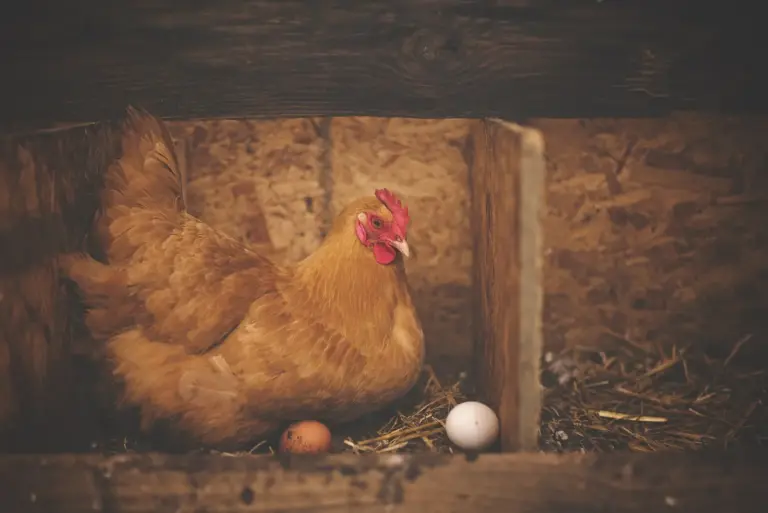
Imagine walking through a permaculture garden: tall fruit trees stretch overhead, casting dappled shade. Beneath them, berry bushes thrive, filling the middle layer. At ground level, herbs and vegetables emerge from rich, fertile soil. Chickens scratch the earth, turning and fertilizing it as they go. Bees flit from flower to flower, pollinating as they go. Nothing here feels wasted—every element has a role, and each role strengthens the whole system.
This is the heart of permaculture: diversity, cooperation, and cycles. It’s farming that doesn’t just take from the land but regenerates it. The benefits are profound: healthier soils, better water retention, natural carbon capture, and food systems that are more resilient to droughts, floods, and pests.
Now, contrast that with the image of a conventional monoculture farm: neat, endless rows of a single crop, tilled soil exposed to the sun, and heavy reliance on fertilizers and pesticides. While efficient in the short term, this model often depletes the soil, reduces biodiversity, and leaves the land weaker with every season.
Permaculture offers an alternative—one that not only sustains, but also restores. And at Le Bec-Hellouin Farm, the soil itself tells us the difference it can make.
Digging Into the Soil
Soil looks simple—just brown earth under our feet. But look closer, and you’ll find it’s a living world made up of tiny building blocks called aggregates. These are like little clumps of soil particles: large ones called macroaggregates, smaller ones called microaggregates, and even finer particles of clay and silt.
Inside these aggregates, organic matter—bits of decomposed plants, roots, and microbes—gets tucked away. This organic matter is rich in carbon, and storing it in soil is crucial for life on Earth. Why? Because carbon stored in soil isn’t released into the atmosphere as CO₂, it doesn’t contribute to heating the planet. Instead, it’s locked underground, nourishing life.
When scientists studied the soils at Le Bec-Hellouin, they uncovered something remarkable:
- Permaculture soils contained between 60 and 73 grams of organic carbon per kilogram of soil.
- The nearby pasture soil had about 49 g/kg.
- The conventional farm fields? Just 11 g/kg.
And when they looked at overall carbon stocks, the story was just as striking:
- Permaculture soils stored 6.3 to 7.7 kg of carbon per square meter.
- Pasture soils held about 5.2 kg/m².
- Conventional fields managed only 1.2 kg/m².
That’s not just a difference—it’s a chasm. For soil life, it’s like comparing a banquet table overflowing with food to an empty pantry with only scraps left behind.
The Cluster of Benefits
But carbon was only part of the story. As researchers dug deeper, they discovered a cluster of benefits emerging within permaculture soils.
These soils weren’t just rich in carbon—they were loaded with the nutrients that plants need to thrive: calcium, magnesium, potassium, and phosphorus. Think of these like the vitamins and minerals of the soil world, the essential ingredients that fuel everything from seed sprouting to fruit ripening.
And there was more. The pH levels in permaculture soils had shifted to be more neutral—neither too acidic nor too alkaline. Scientists sometimes refer to pH as the soil’s “heartbeat,” because it determines how easily plants can access essential nutrients. In a balanced soil, roots can sip up what they need without struggle.
For farmers, this means healthier plants that resist disease, crops that yield more consistently, and soils that require less external input. For ecosystems, it means a cycle that strengthens itself over time.
In other words, permaculture doesn’t just change the numbers in a soil sample—it changes the pulse of the land.
The Forest Garden Whisper
Step into the forest garden at Le Bec-Hellouin, and it feels less like a farm and more like a patch of woodland. Fruit trees rise overhead, their branches forming a green canopy. Beneath them, berry bushes thrive in the shade. Herbs and vegetables carpet the ground, weaving themselves into the undergrowth. Every layer of this garden is alive, humming with activity.
Here’s the twist: this forest garden has only received one compost application—seven years ago. And yet, the soil beneath it remains richer in carbon and nutrients than the nearby pasture. How?
The secret lies in how the system mimics nature. Deep roots draw minerals up from layers far below the surface. Every autumn, leaves fall and decompose, feeding the soil. Branches drop, roots die back, and all of it becomes food for fungi, worms, and microbes. Water trickles slowly through the layers, never wasted, always feeding something on its way down.
Without heavy machinery, without endless compost, the forest garden sustains itself. It’s a living example of how less intervention—simply copying nature’s design—can build fertility over the long term.
It whispers a quiet truth: sometimes, the most resilient systems are the ones that nature writes for us.
The Bigger Question
Still, this story of soil comes with a question mark. Is the carbon stored in permaculture soils permanent… or temporary?
When researchers examined the soils more closely, they noticed that a significant portion of the carbon was stored in coarse organic matter—compost, leaves, and plant fragments. These decompose quickly, releasing carbon back into the atmosphere. By contrast, fine particles bound to clay and silt can lock carbon away for decades, even centuries.
So, while permaculture soils are incredibly rich in organic matter right now, some of that carbon may not stay put for the long haul. The challenge is understanding how to transition that carbon into more stable forms.
And there’s another big question: sustainability at scale. At Le Bec-Hellouin, large amounts of compost and manure were brought in from outside the farm. That raises a practical question—can every farm in the world rely on this level of input? Or do we need systems that balance their own cycles, like the forest garden does, without constant outside help?
The researchers call for long-term studies—tracking these soils over years, even decades—to see whether the carbon remains, how nutrient cycles stabilize, and what permaculture looks like when scaled up.
For us, the takeaway is curiosity. These findings aren’t a final answer; they’re an invitation to keep exploring. To ask deeper questions about how farming can heal land, feed people, and protect the climate all at once.
Why It Matters
Soil isn’t just dirt—it’s one of our greatest allies in the fight against climate change. It’s the foundation of our food systems, the source of water filtration, the home for billions of organisms, and now, increasingly, recognized as a climate solution.
What the team at Le Bec-Hellouin Farm discovered reveals something profound: when we shift how we grow food, we can also alter how the planet stores carbon, cycles nutrients, and sustains life. Permaculture demonstrates that even small-scale changes in farming practices can have ripple effects—leading to healthier soils, crops, and ultimately, healthier people.
The message is simple yet powerful: when soils thrive, everything else thrives as well.
Conclusion
At Le Bec-Hellouin Farm in France, permaculture has revealed something extraordinary: farming doesn’t have to exhaust the land—it can heal it. By mimicking the patterns of forests and ecosystems, soils become richer, carbon finds a home underground, and plants thrive in nutrient-balanced conditions.
The story reminds us of a bigger truth: the solutions to our climate crisis aren’t always futuristic machines or distant technologies. Sometimes, they are right under our feet, in the hum of the soil and the wisdom of natural cycles.
Permaculture offers not just a method of farming, but a vision of partnership—with the land, with water, with the atmosphere, and with life itself. It shows us that every garden bed, every farm, every community has the potential to be part of the solution.
And as we continue on The Planet Journey, one thing is clear: the soil beneath us isn’t just the ground we walk on—it’s the ground of our future.
References
- Lorenz, K., & Lal, R. (2018). Carbon Sequestration in Agricultural Ecosystems. Springer.
- Altieri, M. A. (1995). Agroecology: The Science of Sustainable Agriculture. CRC Press.
- Ferguson, R. S., & Lovell, S. T. (2014). Permaculture for agroecology: design, practice, movement, and worldview. Agronomy for Sustainable Development, 34(2), 251–274.
- Frontiers in Environmental Science (2018). Soil carbon storage in permaculture and conventional agriculture: evidence from a case study in France.