
Hippos are primarily nocturnal creatures. Their most important activities, foraging and social interactions, occur at night.
Starting in the evening, they initiate lengthy and slow foraging walks until they consume up to 35 kg of grass.
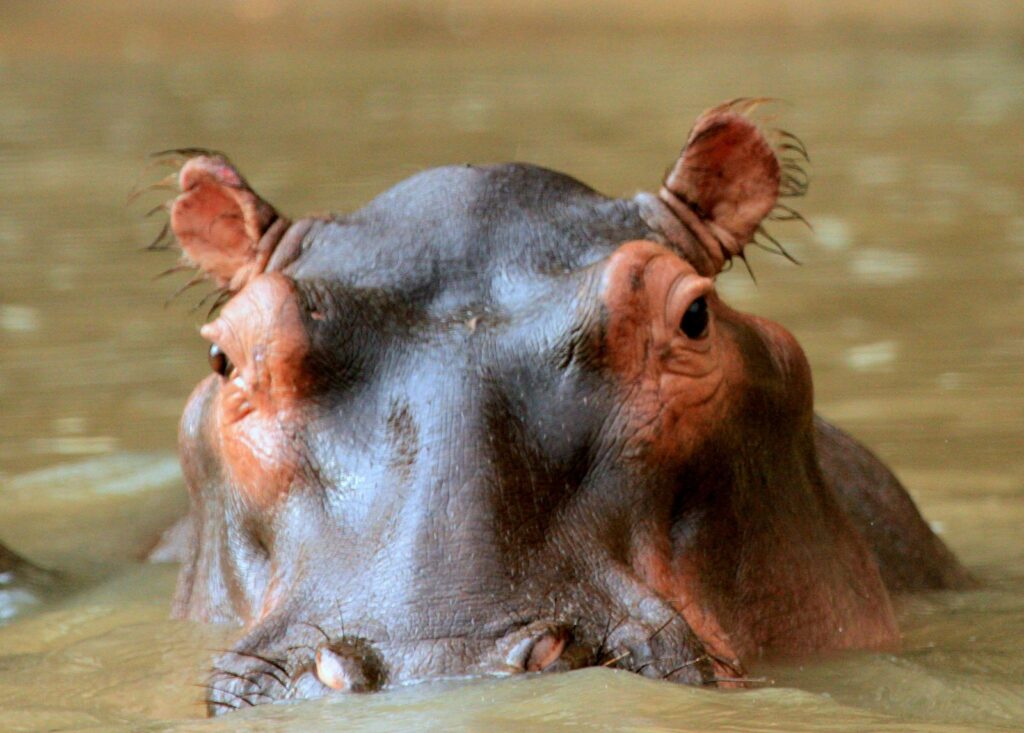
In contrast, daylight hours are typically spent submerged in water, helping hippos regulate body temperature and avoid overheating.
The unique placement of hippos’ eyes, ears, and nostrils helps them live a nocturnal lifestyle. Their nighttime activities influence hippos’ behaviour and social dynamics; group cohesion and communication often develop in the late hours.
Main Takeaways
- Nocturnal Behavior: Hippos are primarily nocturnal, with key activities like foraging and social interactions occurring at night.
- Foraging Patterns: Hippos engage in lengthy foraging walks after dusk, consuming up to 35 kg of grass, typically covering distances of 3.5 km or more.
- Daytime Behavior: During the day, hippos remain submerged in water, which helps regulate their body temperature and provides protection from predators.
- Unique Anatomical Features: The placement of their eyes, ears, and nostrils enables hippos to thrive in a nocturnal environment.
- Social Dynamics: Nighttime interactions are influenced by social hierarchy, with dominant males exploring multiple wading sites while subdominant males tend to stay closer to riverbeds.
- Environmental Influences: Seasonal changes and the availability of wading sites affect hippo activity patterns, with larger ranges observed during wetter seasons.
- Comparative Behavior: Common hippos and pygmy hippos exhibit nocturnal foraging but differ in social structures. Common hippos form larger pods, while pygmy hippos are more solitary.
- Conservation of Energy: Both species retreat to water bodies during the day to conserve energy and avoid overheating, highlighting their semi-aquatic lifestyle.
Hippo Activity Patterns and Night Foraging
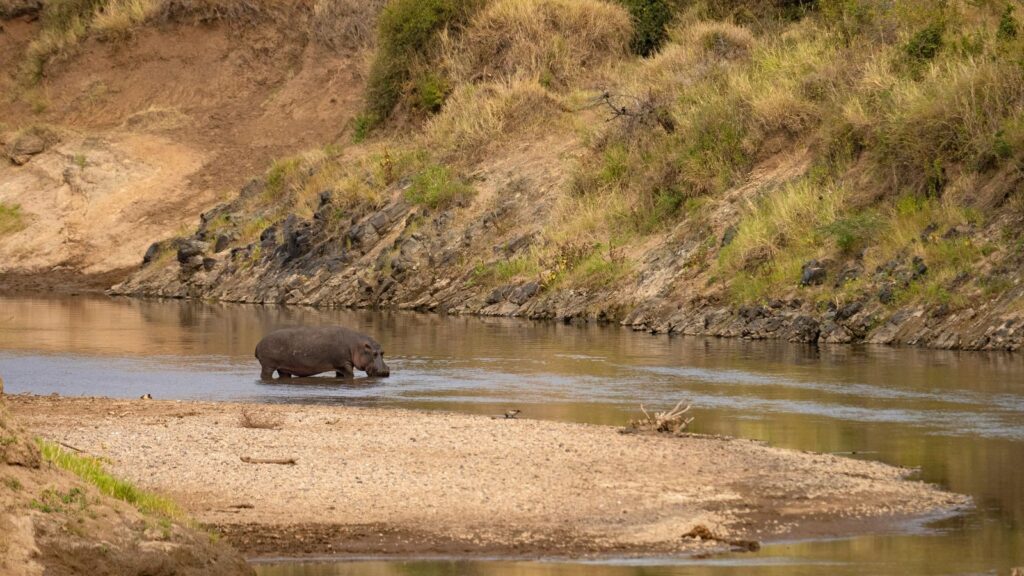
A hippo’s daily routine is largely influenced by its nocturnal nature. Most foraging and social activities occur at night, and as mainly nocturnal animals, hippos demonstrate heightened activity levels during the cooler night hours.
At dusk, they leave the safety of their waters to engage in grazing, often travelling several kilometres in search of food. This behaviour results from their adaptation to cooler temperatures, which supports their increased activity levels.
Studies have shown that hippos’ activity patterns are mainly nocturnal, with peak activity occurring between 18:00 and 06:00 and a mean peak at around 23:57. However, evidence confirmed that their activity was not evenly distributed throughout the day.
Hippos exhibited two main movement patterns: foraging loops and displacements. Individuals would leave and return to the same wading site in the foraging loops, typically only venturing within 3.5 km. Displacement patterns, where a hippo would travel between different sites, were less frequent and exhibited only a maximum movement of 4.83 km. These results reflect the hippos’ reliance on specific area sites, aligning with their nocturnal foraging habits.
During daylight hours, hippos prefer to remain submerged in water bodies. This behaviour not only aids in regulating their body temperature by preventing overheating but also provides a safe refuge from potential threats. The aquatic environment is vital to their daily routine, offering shelter from the harsh sun and conserving energy for nocturnal activities.
Social Interactions at Night
At night, hippos’ social interactions appear influenced by their hierarchical structure and territoriality.
In some studies, dominant males exhibited exploratory behaviour, visiting multiple wading sites, whereas the subdominant males tended to stay closer to their riverbed locations.
These patterns suggest that dominant individuals may have more freedom to roam and explore while subdominant males remain in restricted areas to avoid territorial confrontation.
Nighttime interactions likely revolve around maintaining dominance and avoiding conflict, with hippos spacing themselves based on social rank.
Studies didn’t reveal direct social interactions at night, but the movement patterns suggest that social hierarchy plays a role in determining how and where hippos move during nocturnal hours.
Environmental Influences on Activity
Environmental factors, such as the availability of wading sites and seasonal changes, play a significant role in shaping hippo activity patterns.
Hippos occupy larger home ranges during wetter seasons and display differences in core area sizes depending on the time of year. For instance, seasonal home ranges were largest in the dry season, likely due to reduced water availability, while core areas peaked in the wet season when resources were more abundant.
These environmental influences highlight the dynamic nature of hippo space use and movement, driven by water availability, seasonal resource fluctuations, and habitat structure. These factors directly affect hippo activity patterns and movement behaviour.
Comparing Hippo Species’ Activity
Although all types of hippos are nocturnal, their activity peaking during the night as they forage for sustenance, there are differences between common hippos and pygmy hippos.
Pygmy hippos, more solitary or found in pairs, also engage in nocturnal foraging but may do so more dispersedly, often moving through the dense forest undergrowth.
The social structure of these species diverges considerably. Common hippos are known for their larger group formations, often in pods.
Conversely, pygmy hippos exhibit a more solitary lifestyle, occasionally seen in small pairs, which aligns with their less aggressive and territorial nature than their common counterparts.
Both species retreat to water bodies during daylight hours, preserving their energy and avoiding overheating, so their semi-aquatic lifestyles are very similar.
Conclusions
Hippos are nocturnal and rely on nighttime for foraging and social interactions.
Hippos demonstrate increased activity levels between 18:00 and 06:00, with peak activity around midnight. Their movement patterns reflect adaptations to a nocturnal lifestyle, including foraging loops that keep them close to wading sites and, less frequently, displacement movements between locations.
During the day, hippos remain submerged in water to regulate body temperature and conserve energy. They also use water as a refuge from predators.
Social dynamics are influenced by dominance hierarchies, with dominant males exhibiting more exploratory behaviour than subdominant individuals.
Environmental factors, such as seasonal changes and water availability, are crucial in shaping hippo activity patterns and space use. In wetter seasons, hippos occupy larger home ranges.
Finally, comparing the behaviour of common hippos and pygmy hippos reveals differences in social structure and habitat use, although both species share semi-aquatic, nocturnal lifestyles. These findings contribute to a deeper understanding of hippo behaviour and emphasise the importance of water-based environments in their daily routines.