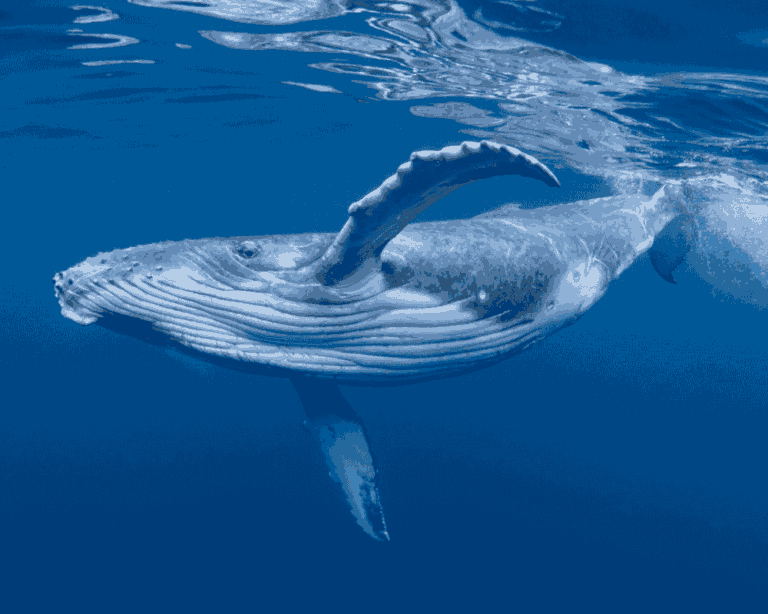

Yes, whales are indeed mammals. They share several critical characteristics with other mammals, such as regulating their body temperature, giving birth to live young, and nourishing their offspring with milk.
Whales breathe air through blowholes and give birth to fully developed calves, which they nurse for extended periods. Their evolution from land-dwelling ancestors to aquatic animals involved significant adaptations in anatomy and physiology, including developing a streamlined body and modified limbs for swimming.
Main Takeaways
- Whales share key mammalian characteristics: body temperature regulation, live births, and milk production for offspring. They breathe air through blowholes and nurse their young for extended periods.
- Whales Vs Fish: Whales have hair/fur, mammary glands, three middle ear bones, a neocortex, sweat glands, heterodont dentition, are warm-blooded, have a diaphragm, four-chambered heart, and mostly give live birth. Fish have scales, gills, and fins, are cold-blooded, have a two-chambered heart, swim bladder, lateral line system, homodont dentition, and mostly lay eggs.
- Whales evolved from land-dwelling ancestors (Pakicetus) around 49 million years ago.
- Whales are divided into baleen whales and toothed whales.
- Female whales produce milk for their calves, providing nutrition and antibodies crucial for growth and immune support.
- Whales give birth to live young, nurse their calves, and have internal fertilization.

What is the difference between mammals and fish?
Before we can understand why whales are classified as mammals, let’s first clarify the distinctions between mammals and fish.
A. Definition of mammals:
Mammals are vertebrate animals that share some physical features, including:
- Hair or fur: All mammals have hair or fur on their bodies at some point in their lives, although it may vary in quantity, position, and function among species.
- Mammary glands: Female mammals have mammary glands that produce milk to feed their young.
- Three middle ear bones: Mammals have three bones (the malleus, incus, and stapes) in their middle ear, which help transmit sound to the inner ear.
- Neocortex: Mammals possess a neocortex, a part of the brain responsible for higher-order cognitive functions like perception, decision-making, and spatial reasoning.
- Sweat glands: Mammals have sweat glands that help regulate body temperature through perspiration.
- Heterodont dentition: Mammals typically have different types of teeth (incisors, canines, premolars, and molars) adapted for various functions.
- Warm-blooded: Mammals are endothermic, meaning they can regulate their body temperature internally and maintain a consistent body temperature despite external conditions.
- Diaphragm: Mammals have a diaphragm, a muscular sheet that separates the thoracic cavity from the abdominal cavity and assists in respiration.
- Four-chambered heart: Mammals have a four-chambered heart, which efficiently separates oxygen-rich and oxygen-poor blood.
- Live birth: Most mammals give birth to live young rather than laying eggs. Exceptions include monotremes, like the platypus and echidna, which lay eggs.
B. Definition of fish:
Fish are aquatic vertebrate animals. Some of the key physical features that distinguish fish from other animals include:
- Scales: Fish typically have scales covering their bodies, providing protection and assisting in movement through the water.
- Gills: Fish use gills to extract oxygen from water, allowing them to breathe underwater.
- Fins: Fish possess fins, which help with propulsion, steering, and maintaining balance in the water.
- Cold-blooded: Fish are ectothermic, meaning they rely on their environment to regulate their body temperature.
- Two-chambered heart: Fish have a two-chambered heart (one atrium and one ventricle), which pumps blood in a single circulatory loop through their bodies.
- Swim bladder: Many fish species have a swim bladder, an internal gas-filled organ that helps control their buoyancy in the water.
- Lateral line system: Fish have a lateral line system, a series of sensory organs running along the sides of their bodies, which helps detect movement and vibration in the water.
- Homodont dentition: Most fish have homodont dentition, meaning their teeth are uniform in shape and function, although some exceptions exist.
- Egg-laying: Most fish reproduce by laying eggs, but some give birth to live young, known as viviparity.

Whale Evolution and Ancestry
Emerging from a lineage of land-dwelling artiodactyls called Pakicetus, whales underwent profound anatomical transformations approximately 49 million years ago to adapt to life in the ocean. The evolution of whales from land-dwelling mammals to marine animals is one of the most fascinating metamorphoses documented in the natural world. This metamorphosis involved a series of remarkable adaptations that enabled these creatures to thrive in aquatic environments.
Key adaptations include:
- Development of streamlined bodies: To facilitate efficient swimming and manoeuvrability in the water.
- Modification of limbs into flippers: Enhancing their ability to navigate the water.
- Evolution of tail flukes: These horizontal tail fins are used for propulsion in the water.
- Changes in respiratory and circulatory systems: Adaptations that allow whales to dive deep and remain submerged for prolonged periods.
Are All Whales Mammals?
Whales can be broadly categorized into two types: baleen whales and toothed whales. Despite their differences in feeding mechanisms and physical appearance, all whales share specific characteristics that place them firmly within the mammal classification. These include warm-bloodedness, lungs for breathing air, a layer of blubber (the fat of the sea mammals) for insulation, and live births with nursing mothers providing milk for their calves.
Do Whales Produce Milk?
One of the key features of mammals is the ability to produce milk to feed their offspring. Whales are no exception to this rule. Female whales, like other mammals, possess mammary glands that produce milk. When a whale calf is born, it receives nutrition and antibodies for its immune system from its mother’s milk. Whale milk has a high fat content, which is crucial for the rapid growth and development of the calf in the challenging ocean environment.

Why Are Whales Mammals, but Sharks Are Not?
Sharks belong to a group of fish called Chondrichthyes, which are characterized by having a cartilaginous skeleton instead of bones. Their respiratory system relies on gills, and they have a different reproductive strategy than mammals. These fundamental anatomy, physiology, and reproduction differences set sharks apart from mammals like whales.
Overview of Reproductive Strategies of Whales
Whales, as mammals, give birth to live young and provide milk for their calves. They have a complex reproductive system, with internal fertilization and a gestation period that varies between species. Whale calves are born tail-first, allowing them to take their first breath quickly upon birth. In contrast, many shark species lay eggs, while others give birth to live young but without providing milk. Shark reproduction often involves external fertilization, and their young are born with a fully formed set of teeth.
The gestation period for whales can vary widely depending on the species, typically ranging from 10 to 18 months. During this time, the developing calf is carried in the womb until it is ready for birth.
Key points about whale reproduction include:
- Calves are born tail-first
- Calves stay close to their mothers to learn necessary survival skills
- Mother whales nurse their calves for at least 6 months to several years
- Strong maternal bonds support the calf’s development
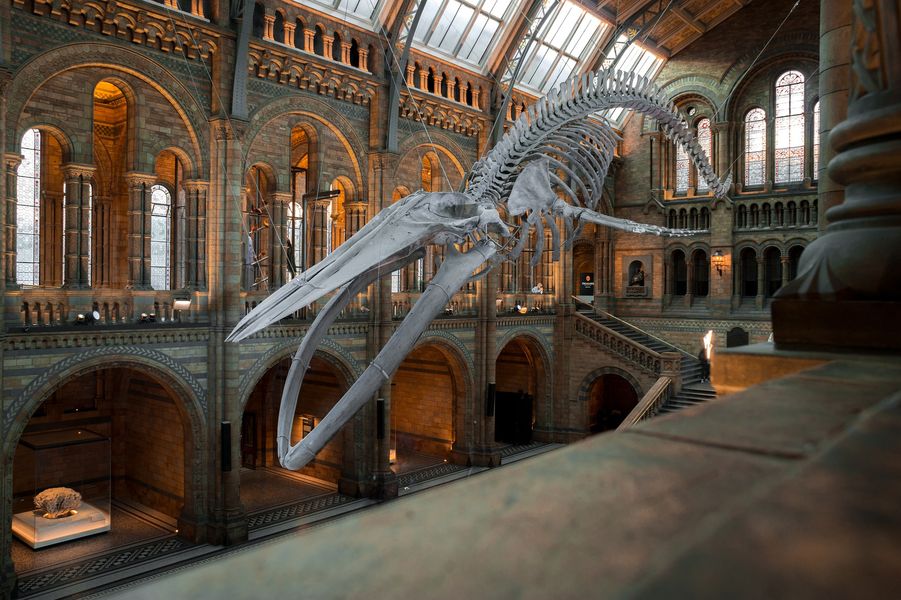
Overview of Anatomy of Whales
A. Warm-bloodedness and thermoregulation:
Whales are warm-blooded, meaning they can maintain a constant body temperature regardless of the water temperature. This characteristic is important for their survival in the different climates and water temperatures they inhabit. Whales have a thick layer of blubber under their skin that provides insulation and helps with thermoregulation.
B. Respiratory system: lungs and blowholes
Unlike fish, which rely on gills to extract oxygen from water, whales have lungs and breathe air. They have a specialized anatomical feature called a blowhole on the top of their head, which they inhale and exhale air. When a whale surfaces, it forcefully exhales through its blowhole, expelling a visible spout of water vapour and air.
C. Social behaviours and intelligence
Whales are known for their complex social structures and behaviours, with some species forming long-lasting family units called pods. They exhibit various behaviours using diverse vocalizations, including cooperative hunting, social bonding, and communication. Whales are considered highly intelligent animals, capable of learning, problem-solving, and even displaying signs of culture.
Conclusions
Whales are unequivocally classified as mammals due to their distinct biological traits, such as regulating body temperature, giving live birth, and nursing their young with milk.
The evolutionary journey from land-dwelling ancestors to their current marine existence involved significant adaptations that facilitated their survival and efficiency in aquatic environments.
While often compared to fish due to their habitat, whales exhibit key differences that firmly place them within the mammalian classification. Their complex social behaviours, advanced respiratory systems, and ability to produce milk for their offspring are the main features that place them in the mammalian class.